 |
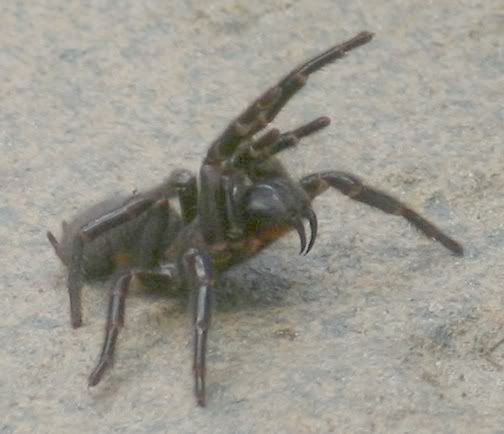
| Sydney Funnel Web Spider, Photobucket- Picture from JazzEx022 http://i284.photobucket.com/albums/ll40/JazzEx022/SydneyFunnel-WebSpider.jpg Backshall, Steve. "Venomous Animals of the World." The Johns Hopkins University Press/ Baltimore. 2007: pg. 112-113 |
The Brazilian Wandering or Banana Spider, are particularly dangerous because they dont seem to mind being in areas where the human population is high. They dont mind, just as long as they get their dose of cockroaches and crickets. So, your probably wondering why they are called banana spiders? Well, when the natives of Brazil would collect banannas to take all over the world, the spiders would hang in the tress and eventually get a free ride. Their venom "results in immediate pain, cold sweats, excessive salavation, cardiac perturbations which leads to death."
 |
| Brazilian Wandering Spider, Photobucket- Picture from jlkreid http://i301.photobucket.com/albums/nn58/jlkreid/brazilianwanderingspider.jpg Backshall, Steve. "Venomous Animals of the World." The Johns Hopkins University Press/ Baltimore. 2007: pg. 70 |

I love handling spiders and trantulas, but i would definitly stay away from the sydney web funnel spider. Those fangs are hung! Do they inject vemon when they keep bitting repeatedly or do they just inject large doses? The banana spider must pack a large bit if they can hide in bananas without being seen.
ReplyDeleteYes, the Sydney Funnel Web injects small amounts of venom with each bite, but since it does it so frequently it really adds up! yikes!
ReplyDeleteWow the Sydney Funnel-Web Spider fangs are the size of cat claws? I am glad these are not from around here, I would be afraid to go out hah.
ReplyDeleteI knew someone who was bit by a banana spider while on a missionary trip in South America. She ended up in the hospital with a very serious wound and infection on her arm.